glamoxyn

Two ways to catch a voice

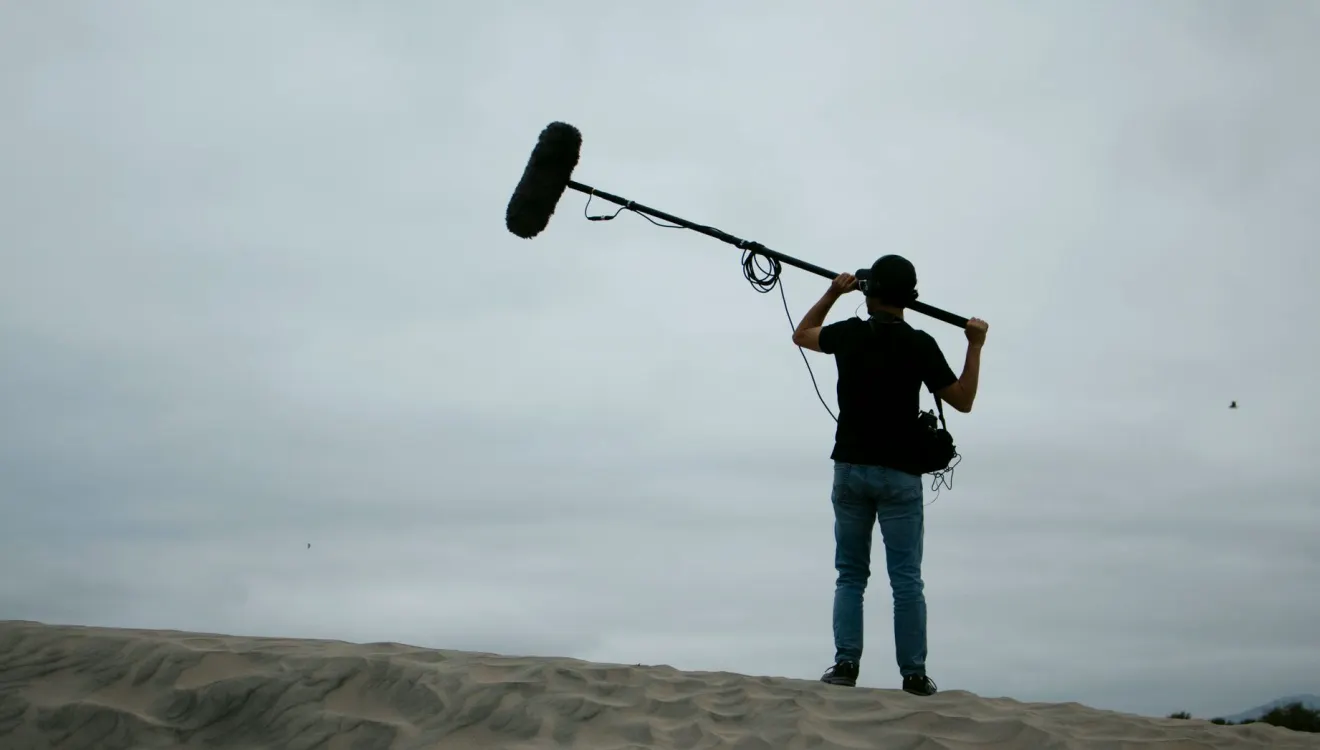
Most speech on a television programme is captured in one of two ways. A lavalier is a small microphone clipped to clothing, a few centimetres from the mouth. A boom is a directional microphone held on a pole just out of shot, pointed at whoever is talking. Both can sound excellent, and both can fail in ways that only show up once the cameras are rolling and the director is waiting.

This note is the second of our three on sound engineering, and it deals with that one choice. Microphone selection sits at the very start of the signal chain, so a poor decision here cannot be repaired later with processing. I have spent my working life on the camera side of the gallery, and I hear the consequences of this decision every time the shot gets wider.

What a lavalier does well

The great strength of a lavalier is consistency. The capsule stays at a fixed distance from the speaker, so the level barely moves when the presenter turns to a guest, walks across the set or leans back in a chair. That steadiness makes mixing calmer, and it lets a sound engineer set gain once and trust it through a long recording.

Lavaliers also suit wide shots. When the camera frames a whole panel or a moving presenter, there is simply nowhere to hide a boom without it dipping into the picture. In late autumn, when live events are often held in cold halls and marquees, a body-worn microphone keeps working while a pole operator would be struggling with reach and draughts.

  • Steady level whatever the speaker does
  • No pole to keep out of wide shots
  • Works for walking and moving presenters

Where a lavalier lets you down

The weak points are practical rather than technical. Fabric rustles against the capsule, jewellery knocks it, and a microphone hidden under a thick winter jumper loses its top end and sounds muffled. Placement matters more than the price of the microphone, and a fitting rushed in the green room is the commonest cause of unusable dialogue.

There is also the radio link. A body-worn transmitter needs a clear frequency, fresh batteries and someone to check both before each recording. In busy venues with many wireless systems running, interference can appear without warning. A lavalier also tends to sound slightly close and chesty, because it sits on the body instead of in front of the face.

  • Clothing noise and muffled tone under heavy fabric
  • Radio interference in crowded venues
  • Batteries and frequencies need checking every time

What a boom does well

A well-handled boom sounds natural. Because the microphone sits in front of and above the speaker, it records the voice as the room hears it, with air around it, and it needs no fitting on the guest. That matters when a nervous contributor arrives five minutes before recording and nobody wants to fuss over cables.

A boom is also easy to redirect. In a scripted scene or a studio drama, the operator can follow a cue and swing to the next speaker, adding the sense of space that a clipped-on capsule struggles to give. The trade-off is skill: a good operator anticipates dialogue, watches the lights for shadows and holds a steady arm for the length of a take.

Where a boom lets you down

A boom depends on the frame. Wide lenses, low ceilings and tight lighting plots leave little space for the pole, and a shadow falling across a presenter's face is a problem for both the lighting designer and the operator. In a multi-camera studio where several angles are live at once, finding a position that stays out of every shot is often impossible.

Cost and crew matter too. A boom needs a dedicated person for the whole shoot, and their fatigue shows in the sound after a couple of hours. For live events with moving speakers and changing stages, one operator rarely covers the ground that a set of body-worn microphones would manage unattended.

  • Needs a skilled operator throughout
  • Hard to hide in wide or multi-camera shots
  • Shadows can fall into the picture

Our recommendation

For studio programmes and live events with several cameras, we recommend lavaliers as the main source, with a boom held in reserve for moments when the guest is seated and the shot is tight. The reasoning is simple: a wide, moving picture decides the microphone, and a lavalier is the only option that follows the speaker everywhere. Careful fitting, spare batteries and a quick check of each channel before recording cover most of its weaknesses.

For single-camera interviews and scripted work, where the framing is tight and time allows rehearsal, a boom still gives the more natural result. Whichever you choose, tell your sound engineer the lens widths and set layout before the day, because that information settles the question faster than any equipment list.

The choice between lavalier and boom is a practical one, decided by framing, crew and venue rather than by taste. For wide, multi-camera and live work we lean towards body-worn microphones, backed up by a boom when the shot allows. If you are planning a programme or event and want a second opinion on how speech should be captured, send us the set plan and we will talk it through.